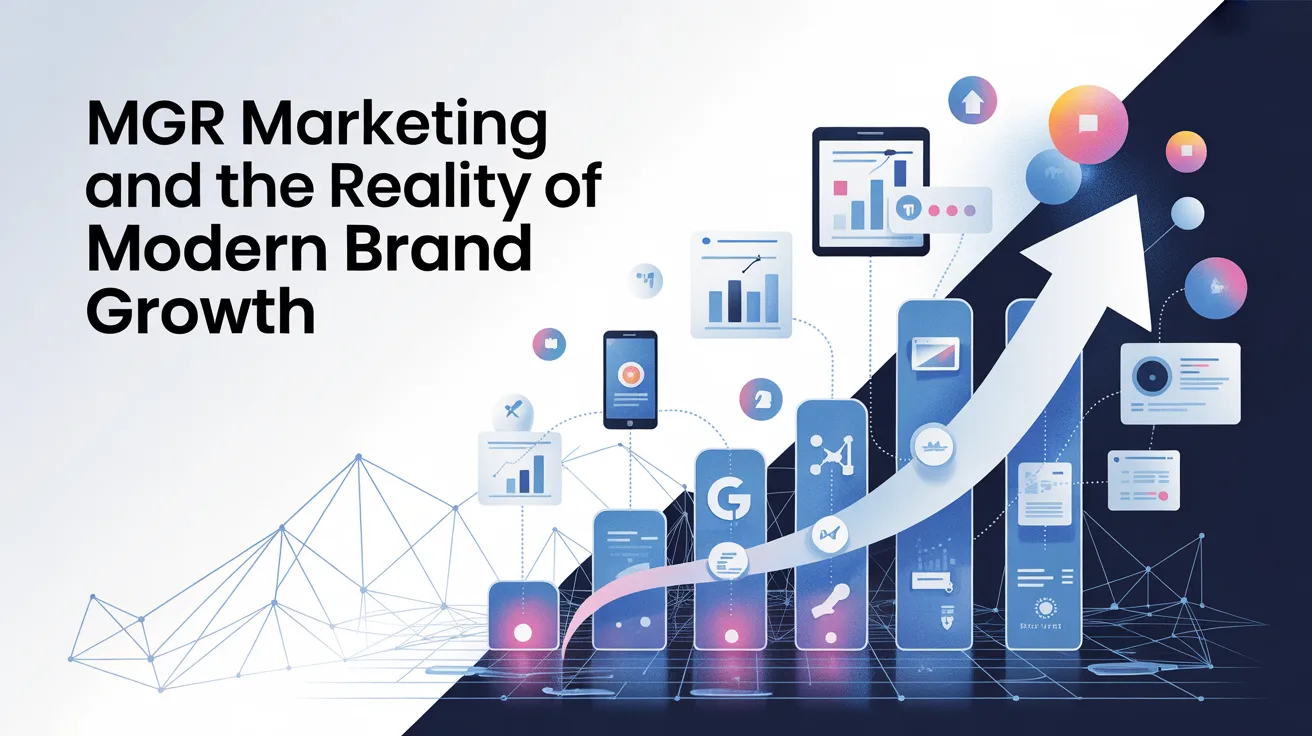
MGR Marketing and the Reality of Modern Brand Growth
Brands often feel trapped between rising ad costs and weak engagement. Campaigns run yet revenue impact stays unclear. Teams struggle to align messaging with audience behavior. This gap is where MGR Marketing enters real conversation. The concept has gained traction because it links market research depth with growth execution clarity.
Marketing leaders seek measurable traction. They want frameworks that connect positioning with demand generation. MGR Marketing represents a structured approach that unifies messaging, channel strategy, and performance analytics within one operational model. That coherence removes friction between creative intent and sales outcomes.
Businesses facing stagnation often discover that scattered tactics dilute momentum. A cohesive growth system becomes necessary. MGR Marketing functions as that system. It turns fragmented promotion into coordinated brand expansion grounded in data insight and market psychology.
The Core Meaning and Strategic Scope of MGR Marketing
The term MGR Marketing refers to Marketing Growth Revenue alignment. It blends strategic planning with revenue accountability. Traditional marketing measured awareness or traffic. This model measures growth velocity and customer lifetime value. It shifts the marketing role from communication support toward business expansion engine.
Companies adopting MGR Marketing restructure internal collaboration. Marketing teams align with sales forecasting and product development cycles. Messaging reflects actual customer demand patterns rather than abstract brand aspirations. That alignment strengthens trust between departments and clarifies performance expectations.
Market maturity shapes how MGR Marketing operates. In emerging sectors it emphasizes category education and trust building. In saturated sectors it focuses on differentiation clarity and conversion efficiency. The framework adapts while preserving its core principle of revenue linked marketing action.
Strategic Philosophy Behind MGR Marketing
Every growth model rests on a belief system. MGR Marketing assumes that customer perception drives revenue acceleration. It prioritizes psychological positioning before channel amplification. Brands first refine value articulation then scale communication across touchpoints.
Positioning clarity reduces acquisition cost. When prospects understand relevance quickly decision cycles shorten. MGR Marketing invests heavily in audience insight research to refine messaging precision. This stage often determines long term growth trajectory.
Execution follows insight. Campaign deployment across search social content and partnerships reflects unified narrative. MGR Marketing treats channels as distribution layers rather than isolated tactics. Consistency across them builds recognition memory and brand authority.
Operational Structure in MGR Marketing Programs
Implementation requires structured workflow. Teams define growth objectives tied to revenue milestones. MGR Marketing translates these goals into campaign architecture and measurement dashboards. Each initiative links directly to pipeline contribution.
Content production becomes strategic rather than reactive. Messaging themes align with buyer journey phases. MGR Marketing ensures awareness content attracts relevant prospects while conversion content resolves decision friction. This mapping strengthens funnel continuity.
Performance monitoring closes the loop. Data feedback informs iterative adjustments. MGR Marketing thrives on adaptive optimization rather than static planning. Campaign refinement becomes continuous learning rather than periodic correction.
Services and Capabilities Within MGR Marketing Frameworks
Organizations rarely execute growth marketing internally at full scale. Specialized capabilities support expansion. MGR Marketing services typically include strategy development brand positioning demand generation analytics integration and conversion optimization. Each function interlocks with others.
Strategic planning begins with market landscape analysis. Competitive mapping reveals positioning gaps. MGR Marketing agencies often conduct audience segmentation research to uncover unmet motivations. That insight guides message differentiation.
Creative execution translates strategy into perception. Visual identity tone narrative and campaign storytelling must align with growth objectives. MGR Marketing treats creative work as behavioral influence rather than aesthetic expression. Messaging clarity outranks stylistic experimentation.
Demand Generation and Lead Quality Engineering
Lead volume alone rarely sustains growth. Quality determines revenue impact. MGR Marketing emphasizes targeting precision through audience intent signals and behavioral data. Campaigns prioritize prospects with purchase readiness indicators.
Channel selection follows audience behavior patterns. Search platforms capture active demand. Social platforms nurture interest. Content ecosystems educate prospects. MGR Marketing orchestrates these layers into synchronized acquisition flow.
Conversion optimization ensures leads become customers. Landing experiences align with messaging promise. MGR Marketing continuously tests copy structure offers and user experience factors to improve close rates. Incremental gains compound into significant revenue shifts.
Analytics and Attribution in MGR Marketing Systems
Measurement integrity defines credibility. MGR Marketing relies on multi touch attribution models that trace influence across interactions. Marketers evaluate how awareness activities contribute to downstream conversion rather than judging channels in isolation.
Data integration across CRM analytics and advertising platforms supports visibility. MGR Marketing dashboards track acquisition cost lifetime value and funnel velocity. Leadership gains transparent insight into marketing contribution.
Insight extraction guides future decisions. Patterns reveal which segments respond best to messaging themes. MGR Marketing converts raw data into actionable intelligence that informs strategy refinement and budget allocation.
Strategic Planning Process in MGR Marketing Execution
Planning begins with growth ambition articulation. Organizations define target revenue expansion or market share shift. MGR Marketing converts ambition into measurable marketing objectives connected to customer acquisition and retention.
Audience research forms the next stage. Behavioral analysis identifies motivations barriers and decision triggers. MGR Marketing uses qualitative interviews and quantitative data to map buyer psychology. Messaging foundations emerge from this exploration.
Positioning development follows research. Brands articulate value proposition differentiation and emotional resonance. MGR Marketing ensures positioning reflects authentic capability rather than aspirational claims. Authenticity sustains long term trust.
Channel Architecture and Campaign Mapping
Once positioning stabilizes channels align with buyer journey phases. Awareness channels reach broad segments. Consideration channels deliver education. Conversion channels remove purchase hesitation. MGR Marketing sequences these exposures to build familiarity and confidence.
Campaign themes extend across formats. Articles videos webinars and ads share narrative continuity. MGR Marketing reinforces memory through repetition of core message structure. Familiar language accelerates comprehension.
Resource allocation depends on expected return. Channels with higher intent signals receive larger investment. MGR Marketing balances experimentation with proven performers. This approach maintains innovation while protecting revenue flow.
Continuous Optimization and Learning Cycles
Markets evolve rapidly. Static strategy weakens impact. MGR Marketing embeds testing culture within operations. Hypotheses guide experiments across messaging audience targeting and creative presentation.
Results analysis identifies winning patterns. MGR Marketing scales effective tactics while retiring weak performers. Learning compounds over time creating performance advantage against competitors who rely on intuition alone.
Knowledge documentation preserves insight. Teams record experiments outcomes and lessons. MGR Marketing becomes institutional knowledge rather than individual expertise. Organizational memory strengthens future strategy cycles.
Industry Applications and Real Business Context of MGR Marketing
Different sectors apply growth marketing differently. Technology firms emphasize product education and adoption acceleration. MGR Marketing in this sector focuses on demonstrating functional value and integration benefits.
Healthcare providers prioritize trust and credibility. Regulatory sensitivity shapes communication tone. MGR Marketing campaigns here highlight expertise reassurance and patient outcomes. Reputation building outweighs aggressive promotion.
Retail brands seek traffic and purchase frequency. Emotional connection influences loyalty. MGR Marketing for retail integrates storytelling with seasonal campaigns and personalization strategies that encourage repeat engagement.
B2B Enterprise Environments
Enterprise sales cycles involve multiple stakeholders. Decision processes extend over months. MGR Marketing in B2B environments nurtures prospects through thought leadership and case based validation.
Account based marketing plays central role. Campaigns target specific organizations with tailored messaging. MGR Marketing aligns content with each account’s industry challenges and strategic priorities.
Sales enablement integration ensures continuity. Marketing materials support sales conversations with consistent narrative. MGR Marketing bridges marketing awareness with sales persuasion to shorten deal timelines.
Consumer Brands and Emotional Resonance
Consumer markets rely heavily on perception. Brand personality shapes preference. MGR Marketing emphasizes storytelling and identity alignment to create emotional attachment.
Influencer collaboration expands reach. Authentic advocacy increases credibility. MGR Marketing evaluates influencer alignment with brand values rather than follower counts alone.
Experience design reinforces loyalty. Packaging digital interaction and service tone contribute to perception. MGR Marketing integrates these touchpoints into unified brand experience that sustains engagement.
Measuring Performance and ROI in MGR Marketing
Growth marketing demands accountability. MGR Marketing measures success through revenue impact rather than vanity metrics. Conversion rates acquisition cost and lifetime value define effectiveness.
Funnel velocity indicates efficiency. Faster movement from awareness to purchase signals message clarity. MGR Marketing tracks stage transition rates to identify friction points.
Retention metrics reveal long term value. Repeat purchase frequency and churn rates show satisfaction. MGR Marketing extends beyond acquisition to sustain customer relationships and maximize lifetime revenue.
Data Infrastructure and Reporting Practices
Reliable data requires integration. MGR Marketing systems connect analytics platforms CRM databases and advertising tools. Unified datasets prevent fragmented insight.
Reporting cadence balances responsiveness and stability. Weekly snapshots reveal short term shifts. Monthly reviews assess strategic direction. MGR Marketing maintains both perspectives to guide decisions.
Visualization enhances comprehension. Dashboards display key metrics with clarity. MGR Marketing leadership reviews performance without technical interpretation barriers.
Interpreting Results and Strategic Adjustment
Numbers require context. Market conditions competitor activity and seasonality influence outcomes. MGR Marketing interprets metrics alongside external factors to avoid misjudgment.
Insight drives adaptation. If acquisition cost rises messaging or targeting may shift. MGR Marketing treats metrics as signals guiding evolution rather than verdicts of failure.
Continuous learning sustains competitiveness. Organizations that refine strategy based on evidence outperform static rivals. MGR Marketing embeds this adaptive mindset into marketing culture.
Choosing and Implementing MGR Marketing Partnerships
Many firms collaborate with external specialists. Selecting the right partner shapes success. MGR Marketing agencies vary in expertise industry focus and methodology depth.
Evaluation begins with strategic understanding. Agencies should demonstrate insight into client market dynamics. MGR Marketing partners who ask nuanced questions signal analytical capability.
Execution capability matters equally. Portfolio evidence of measurable growth outcomes indicates competence. MGR Marketing success stories reveal practical experience beyond theoretical claims.
Integration with Internal Teams
Collaboration defines implementation quality. External experts must align with internal stakeholders. MGR Marketing partnerships thrive when communication flows openly between marketing sales and leadership.
Knowledge transfer strengthens autonomy. Agencies should document processes and insights. MGR Marketing becomes embedded capability rather than outsourced dependency.
Cultural alignment influences cooperation. Shared values and expectations reduce friction. MGR Marketing relationships function best when both sides pursue long term growth rather than short campaigns.
Practical Implementation Timeline
Adoption unfolds in phases. Initial months focus on research positioning and planning. MGR Marketing establishes strategic foundation before aggressive campaign rollout.
Execution phase follows planning. Campaigns launch across selected channels with monitoring systems active. MGR Marketing tracks early indicators to validate assumptions.
Optimization phase sustains momentum. Data feedback informs refinement. MGR Marketing evolves continuously ensuring growth trajectory remains upward.
Practical Performance Snapshot of MGR Marketing Programs
| Industry Sector | Primary Objective | Key Channels | Core Metric | Growth Impact |
|---|---|---|---|---|
| SaaS Technology | User Acquisition | Search Content | Trial Conversion | Revenue Expansion |
| Healthcare | Trust Building | Educational Media | Appointment Rate | Patient Volume |
| Retail Ecommerce | Repeat Purchase | Social Email | Order Frequency | Customer Value |
| Financial Services | Lead Quality | Search Webinars | Qualified Leads | Pipeline Growth |
| Manufacturing B2B | Account Penetration | Events Content | Deal Size | Contract Value |
Frequently Asked Questions About MGR Marketing
What distinguishes MGR Marketing from traditional marketing?
Traditional marketing often tracks awareness or impressions. MGR Marketing connects activity directly to revenue growth and customer lifetime value. It emphasizes measurable business impact rather than communication exposure.
Is MGR Marketing suitable for small businesses?
Smaller firms benefit strongly because resources are limited. MGR Marketing prioritizes high intent audiences and efficient channels. That focus reduces wasted spend and accelerates traction.
How long before results appear with MGR Marketing?
Initial insight emerges within months. Sustainable revenue shift requires longer horizon. MGR Marketing builds cumulative momentum through consistent optimization and audience familiarity.
Does MGR Marketing require advanced analytics tools?
Basic analytics platforms can support early stages. Mature programs integrate deeper attribution systems. MGR Marketing evolves measurement sophistication as growth scale increases.
Can MGR Marketing improve brand perception as well as sales?
Brand perception drives conversion likelihood. MGR Marketing refines positioning clarity and message relevance. Improved perception often precedes revenue lift.
What internal roles are needed for MGR Marketing success?
Strategic leadership creative execution data analysis and sales alignment all contribute. MGR Marketing succeeds when cross functional collaboration replaces siloed activity.
The Strategic Value of MGR Marketing for Long Term Growth
Sustainable growth rarely emerges from isolated campaigns. It arises from alignment between market insight messaging clarity and execution discipline. MGR Marketing represents that alignment in structured form. Organizations adopting it gain visibility into how marketing drives revenue.
Competitive landscapes intensify pressure on acquisition efficiency. Brands that communicate relevance clearly capture attention faster. MGR Marketing strengthens this clarity through research driven positioning and consistent narrative delivery.
Trust remains central to purchase decisions. Customers choose brands they understand and believe. MGR Marketing nurtures that trust through coherent messaging and value demonstration across every touchpoint. The result is durable growth rooted in genuine market connection.