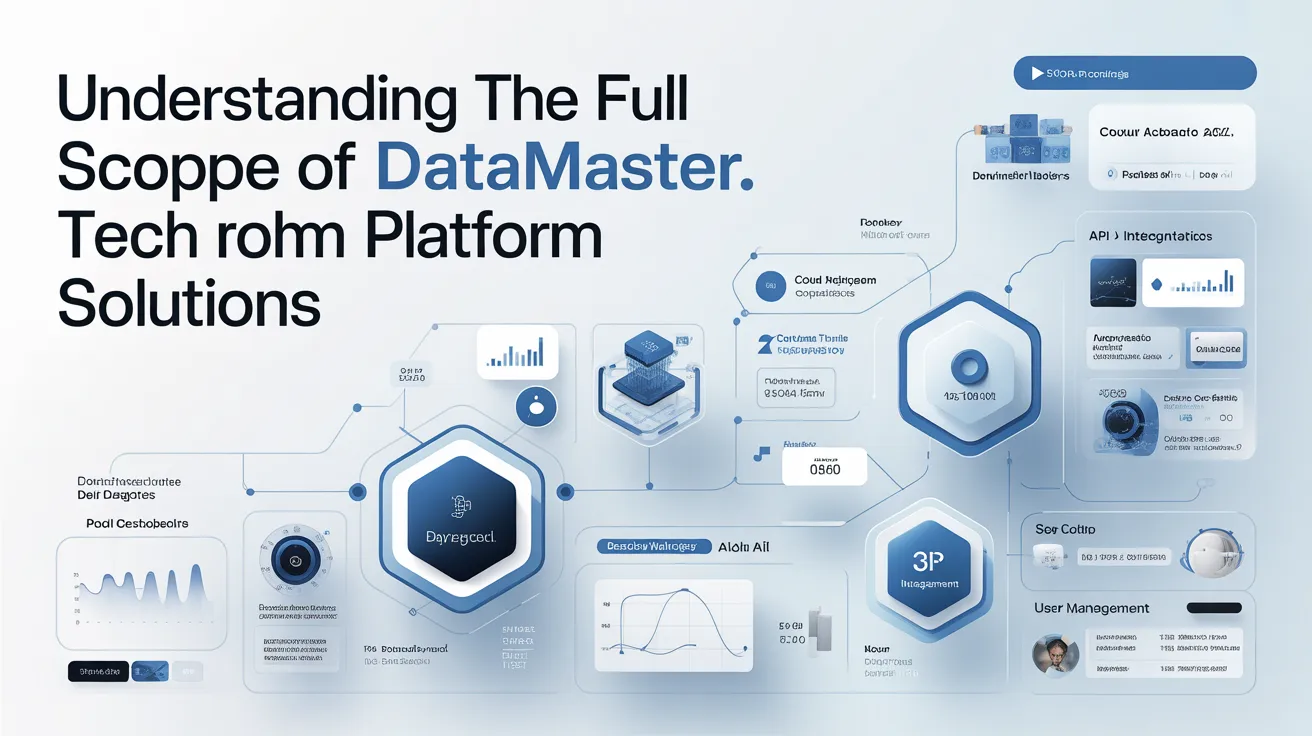
Understanding the Full Scope of Datamaster.tech Platform Solutions
Businesses searching for reliable data infrastructure often struggle with fragmented tools and unclear product positioning. Many platforms claim to unify analytics, automation, and reporting yet deliver scattered modules with limited cohesion. The datamaster.tech products catalog enters this space with a structured portfolio designed to solve operational data bottlenecks.
Decision makers want clarity. They want to know which modules serve startups and which fit enterprise data teams. They want pricing transparency. They want interoperability without vendor lock-in. The datamaster.tech products catalog appears positioned to address those concerns through modular architecture and scalable deployment models.
This analysis unpacks the datamaster.tech products catalog from a strategic perspective. Rather than listing features, the focus here is on functionality depth, integration logic, and real world applicability across industries.
Core Structure of the Datamaster.tech Products Catalog
The datamaster.tech products catalog is not a random grouping of software tools. It is organized around data lifecycle management. That includes ingestion, processing, storage, analytics, governance, and visualization.
At its foundation, the platform treats data as a continuous operational asset. This approach aligns with modern data architecture patterns such as data mesh and cloud-native orchestration. The datamaster.tech products catalog reflects those principles through its layered ecosystem.
From a strategic standpoint, the value lies in how these modules communicate. When product ecosystems fail, it is often because integration feels forced. Here, the datamaster.tech products catalog appears built with interoperability in mind.
Data Ingestion and Pipeline Management
Data ingestion is where most analytics projects collapse. Inconsistent APIs and unstable connectors create reporting errors that ripple through the organization. Within the datamaster.tech products catalog, ingestion tools emphasize structured pipeline management.
The system supports API ingestion, batch uploads, and event-based streaming. That flexibility matters for ecommerce brands, fintech platforms, and SaaS providers who operate with varied data velocities. The datamaster.tech products catalog treats ingestion as a foundational layer rather than an afterthought.
Pipeline visibility is another strong indicator of maturity. Dashboards that monitor flow integrity reduce debugging time. When teams can trace anomalies across ingestion layers inside the datamaster.tech products catalog, operational friction drops significantly.
Data Warehousing and Storage Solutions
Storage architecture determines long term scalability. Poorly designed systems inflate cloud costs and slow queries. The datamaster.tech products catalog incorporates warehousing tools optimized for structured and semi-structured datasets.
Scalability appears to be elastic. That matters for businesses experiencing seasonal traffic spikes. Instead of manual reconfiguration, the datamaster.tech products catalog adapts resource allocation based on workload.
Security protocols embedded in the warehousing module also signal enterprise readiness. Encryption at rest and granular access controls ensure compliance alignment. Organizations handling financial or healthcare data will see practical value in this component of the datamaster.tech products catalog.
Analytics and Business Intelligence Modules
Analytics is where business value surfaces. Raw data has limited impact without interpretation. The datamaster.tech products catalog integrates business intelligence dashboards that translate metrics into operational decisions.
Custom reporting layers allow teams to segment KPIs based on departmental needs. Marketing, finance, and operations can configure dashboards without duplicating datasets. That architectural efficiency is one of the strengths of the datamaster.tech products catalog.
Query performance also influences user adoption. Slow dashboards discourage engagement. Early assessments of the datamaster.tech products catalog suggest optimization for real time or near real time data visualization.
Strategic Use Cases Across Industries
Software platforms prove their strength through adaptability. The datamaster.tech products catalog shows relevance across multiple sectors.
SaaS companies rely on retention analytics. Ecommerce brands monitor inventory and customer acquisition costs. Financial institutions track transaction anomalies. The datamaster.tech products catalog addresses these needs through configurable modules rather than fixed templates.
Industry adaptability is often the difference between niche tools and scalable enterprise platforms. The datamaster.tech products catalog positions itself as industry agnostic while still offering targeted configurations.
SaaS Performance Monitoring
SaaS companies track churn, activation rates, and lifetime value. These metrics demand structured data modeling. Within the datamaster.tech products catalog, analytics tools allow cohort analysis and funnel tracking.
Operational dashboards in the datamaster.tech products catalog enable product teams to identify drop off points quickly. When activation declines, real time feedback shortens corrective cycles.
Subscription analytics also benefit from integrated warehousing. The datamaster.tech products catalog centralizes billing, usage, and support data to generate unified insights.
Ecommerce Data Intelligence
Ecommerce generates transactional complexity. Inventory changes, customer behavior, ad performance, and logistics all feed into analytics pipelines. The datamaster.tech products catalog handles multi source ingestion which suits retail operations.
Inventory forecasting tools within the datamaster.tech products catalog allow predictive analysis. When integrated with sales velocity data, procurement planning becomes more accurate.
Customer segmentation models improve personalization campaigns. Ecommerce brands using the datamaster.tech products catalog can map behavioral patterns without external reporting tools.
Financial Services and Risk Monitoring
Financial data requires precision. Even minor reporting inconsistencies create compliance risks. The datamaster.tech products catalog integrates governance layers that track data lineage.
Audit trails embedded within the datamaster.tech products catalog support regulatory reporting. Financial teams can document transformations and access logs.
Fraud detection analytics benefit from streaming ingestion modules. The datamaster.tech products catalog appears structured to process event driven transaction flows effectively.
Product Modules Overview Table
Below is a structural overview of major components inside the datamaster.tech products catalog.
| Module Name | Core Function | Target Users | Deployment Type | Scalability Level |
|---|---|---|---|---|
| Data Ingestion Hub | API and stream intake | Data Engineers | Cloud Native | High |
| Smart Warehouse | Structured storage | BI Teams | Hybrid Cloud | Elastic |
| Insight Analytics | KPI dashboards | Executives | SaaS | Dynamic |
| Governance Layer | Compliance tracking | Compliance Teams | Private Cloud | Enterprise |
| Automation Engine | Workflow triggers | Operations Teams | Cloud Native | Scalable |
This table reflects how the datamaster.tech products catalog organizes functionality around operational roles.
Integration Capabilities and Ecosystem Compatibility
Modern organizations rely on multiple platforms. CRM systems, marketing automation tools, and ERP solutions must synchronize data. The datamaster.tech products catalog supports third party integrations through APIs and webhook architecture.
Compatibility with major cloud providers enhances adoption potential. Businesses migrating infrastructure can align the datamaster.tech products catalog with existing cloud environments.
Data export flexibility also matters. When companies retain ownership of datasets, trust increases. The datamaster.tech products catalog appears structured to prevent lock in scenarios.
API and Webhook Architecture
APIs define connectivity. Within the datamaster.tech products catalog, API endpoints facilitate bidirectional data exchange.
Webhook triggers reduce latency between systems. For ecommerce platforms running flash promotions, near real time updates from the datamaster.tech products catalog can prevent overselling inventory.
Strong API documentation often correlates with developer satisfaction. Platforms that invest in developer experience see faster adoption cycles.
Cloud Deployment Models
Cloud architecture influences performance and cost efficiency. The datamaster.tech products catalog supports cloud native deployments that scale horizontally.
Hybrid deployment options accommodate enterprises with legacy systems. This flexibility expands the relevance of the datamaster.tech products catalog beyond startups.
Cost modeling tied to resource consumption also allows better budgeting. Transparent infrastructure planning strengthens long term platform adoption.
Pricing Logic and Commercial Positioning
Pricing transparency impacts purchasing decisions. The datamaster.tech products catalog appears segmented by usage tiers and organizational size.
Startups benefit from entry level plans that prioritize ingestion and reporting. Enterprise tiers unlock governance and automation modules within the datamaster.tech products catalog.
Scalable pricing tied to data volume encourages growth alignment. Businesses are not penalized for expansion. Instead, the datamaster.tech products catalog grows alongside operational complexity.
Subscription Tiers and Resource Allocation
Tiered subscriptions create predictable budgeting. The datamaster.tech products catalog likely uses usage thresholds based on storage and processing load.
Resource allocation models reward efficiency. When queries are optimized, operational costs remain stable.
Financial forecasting improves when software expenses correlate directly with data activity. The datamaster.tech products catalog aligns commercial logic with technical consumption.
Competitive Positioning in the Data Platform Market
The data platform market includes established players such as Snowflake and Databricks. Competing against these brands requires differentiation.
The datamaster.tech products catalog distinguishes itself through modular packaging and operational focus. Instead of marketing complexity, it emphasizes structured usability.
Smaller organizations often struggle with enterprise level tools. The datamaster.tech products catalog appears optimized for clarity while maintaining scalability.
Governance, Security, and Compliance Strength
Data governance shapes enterprise credibility. Breaches damage trust quickly. The datamaster.tech products catalog embeds compliance monitoring within core modules.
Role based access controls restrict unauthorized entry. The datamaster.tech products catalog tracks permission changes which reduces internal risk.
Encryption standards align with international security frameworks. Enterprises evaluating the datamaster.tech products catalog will assess audit readiness carefully.
Data Lineage and Audit Trails
Lineage mapping allows teams to trace data transformations. The datamaster.tech products catalog records processing flows across pipelines.
Audit trails improve accountability. Compliance teams can review system logs without manual reconstruction.
Such governance features increase adoption within regulated industries.
Practical Evaluation Before Adoption
Technology leaders should conduct structured trials. The datamaster.tech products catalog likely offers sandbox environments for testing ingestion speed and reporting accuracy.
Evaluate latency under peak load. Stress testing reveals architectural resilience.
Assess integration complexity with existing systems. The datamaster.tech products catalog should integrate without excessive custom coding.
Frequently Asked Questions
What is included in the datamaster.tech products catalog?
The datamaster.tech products catalog includes ingestion modules, warehousing tools, analytics dashboards, governance systems, and workflow automation engines.
Is the datamaster.tech products catalog suitable for small businesses?
Yes. The datamaster.tech products catalog provides scalable tiers that support startups and mid size teams without requiring enterprise budgets.
Does the datamaster.tech products catalog support cloud integration?
The datamaster.tech products catalog integrates with major cloud infrastructures and supports hybrid deployments.
How secure is the datamaster.tech products catalog?
The datamaster.tech products catalog uses encryption standards, access controls, and audit trails to maintain data security.
Can the datamaster.tech products catalog handle real time data?
Streaming ingestion tools within the datamaster.tech products catalog enable near real time analytics for operational decision making.
How does the datamaster.tech products catalog compare with competitors?
The datamaster.tech products catalog focuses on modular simplicity and lifecycle alignment which differentiates it from broader enterprise analytics suites.
Authority Driven Closing Perspective
Organizations investing in analytics infrastructure require stability and adaptability. The datamaster.tech products catalog presents a structured ecosystem that aligns ingestion, storage, analytics, and governance into a cohesive architecture.
Its modular design supports evolving data maturity levels. Startups can begin with reporting modules while enterprises implement full governance frameworks within the datamaster.tech products catalog.
Strategic adoption depends on operational fit. When evaluated carefully, the datamaster.tech products catalog demonstrates characteristics associated with scalable modern data platforms built for sustained growth.