What the Internet Looked Like in Google’s 1998- First Year
Search once felt frustrating. Pages loaded slowly. Results were cluttered with directories. Users clicked blindly hoping to find something relevant. Anyone who remembers browsing in the late 1990s recalls how chaotic the early web felt. Then something different appeared in google 1998.
The arrival of google in 1998 marked a shift that many did not immediately recognize. There was no flashy homepage. No banners. No distractions. Just a clean white screen and a search box. That simplicity signaled a new philosophy about how information should be organized and delivered.
People searching for answers today often wonder how it all started. What made google in 1998 different from other search engines of that era? Why did a small university research project evolve into the backbone of modern information retrieval? Understanding in google 1998 reveals how the foundations of search were engineered with academic rigor and bold vision.
The Internet Landscape Before Google in 1998
The web before google in 1998 was fragmented and messy. Users relied on portals like Yahoo which curated directories manually. Results were organized by category rather than algorithmic relevance. That meant content quality often depended on human editors rather than mathematical signals.
Another major player was AltaVista which impressed users with speed and indexing scale. It crawled millions of pages at a time when that number felt enormous. Yet relevance still struggled. Keyword stuffing dominated rankings. Page creators exploited metadata fields to manipulate visibility.
Search engines such as Lycos and Excite competed for attention by transforming into media portals. News. Email. Weather. Chat. The search box became secondary. Advertising began shaping layout decisions.
In that climate google in 1998 entered quietly. It did not try to be a portal. It focused only on ranking pages better. That singular focus distinguished google in 1998 from competitors that were drifting toward content aggregation rather than algorithmic precision.
The Stanford Research Roots Behind Google
The origin story of google in 1998 begins at Stanford University. Two PhD students were researching link structures across the web. Their insight was simple yet radical. Links could serve as citations. Pages referenced by many other pages likely held authority.
That idea became the backbone of PageRank. The academic framing mattered. The founders approached search as an information retrieval problem rather than a portal business. When google in 1998 launched publicly, it reflected that research discipline.
Servers were assembled from inexpensive hardware. Early infrastructure was built in dorm rooms. This scrappy engineering culture shaped product priorities. Performance. Relevance. Scalability. Those themes defined google in 1998 and continue to influence modern search architecture.
The Minimalist Interface That Shocked the Web
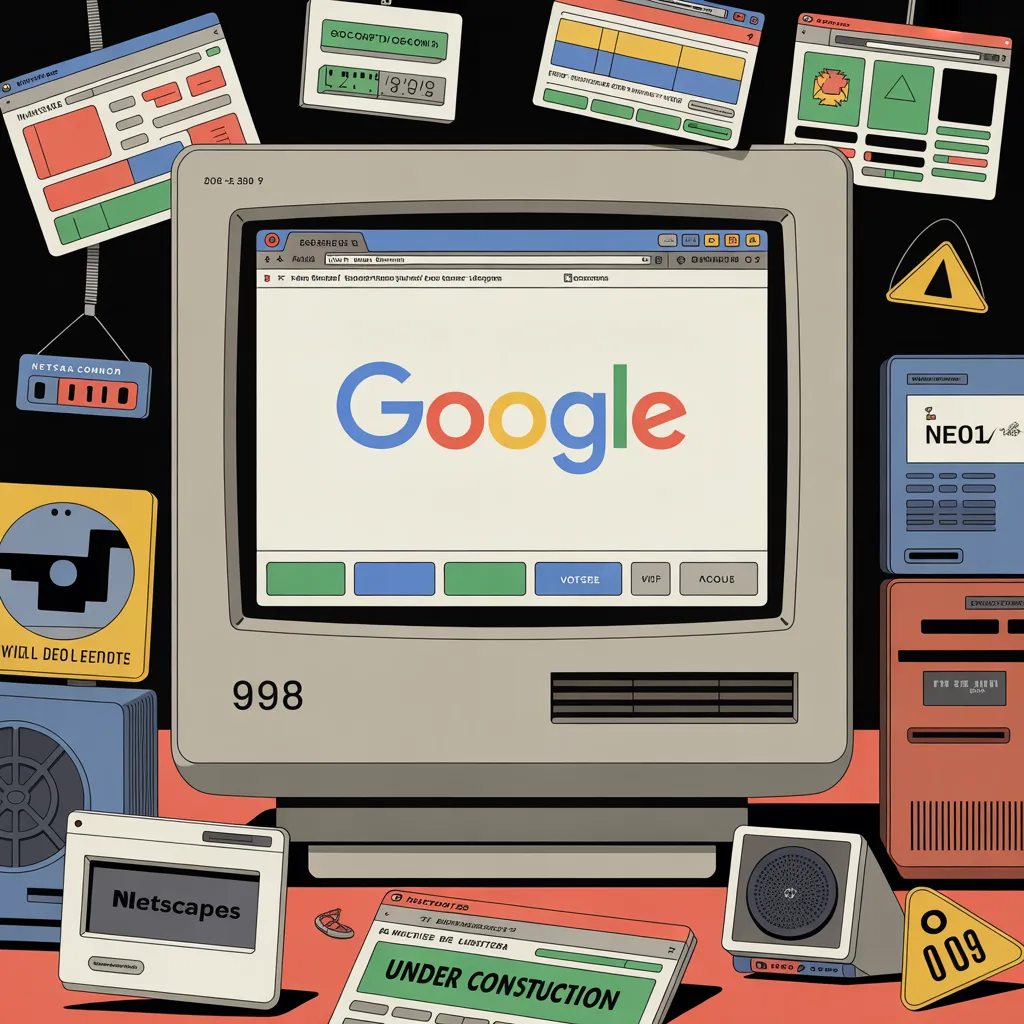
Users encountering google in 1998 noticed something almost unsettling. The homepage looked empty. Competitors filled screens with links and graphics. Google offered whitespace.
That restraint reflected confidence in the algorithm. The founders believed users wanted results fast. They did not need visual noise. The spare design of google in 1998 improved load speed on slow dial up connections. That practical choice enhanced usability at a time when internet bandwidth was limited.
The minimal interface also reduced cognitive friction. People typed queries and received ranked lists. That clarity created trust. It communicated that google in 1998 prioritized information over advertising clutter.
How PageRank Defined Search Quality in Google in 1998
PageRank was not just a feature. It was the core innovation that differentiated google in 1998. Instead of counting keywords alone, it evaluated link authority. A link from an established website carried more weight than dozens of links from obscure pages.
This recursive ranking model mirrored academic citation systems. If influential scholars cited a paper, it gained credibility. Google translated that logic into web mathematics. The elegance of the concept made google in 1998 feel intellectually grounded.
The impact became visible quickly. Queries returned results that felt intuitive. Users spent less time scanning irrelevant pages. Word spread organically across universities and tech communities.
Why Link Analysis Beat Keyword Stuffing
Before google in 1998, search engines relied heavily on on page signals. Webmasters exploited that by repeating keywords excessively. Relevance suffered.
Google’s link analysis approach reduced that vulnerability. Manipulating link authority required broader influence across the web. It raised the barrier for spam. That shift enhanced trust.
In google in 1998 the algorithm rewarded reputation rather than repetition. That philosophical shift redefined search quality standards.
Early Infrastructure and Data Scaling Challenges
Running google in 1998 required solving technical bottlenecks. The web was growing rapidly. Crawling and indexing demanded distributed systems. The founders built clusters from commodity hardware. Fault tolerance emerged as a practical necessity rather than theoretical ideal.
Storage constraints shaped design decisions. Data compression. Efficient indexing. Query caching. These engineering layers were developed during google in 1998 to ensure responsiveness. That culture of scalable systems became central to Google’s long term growth.
Growth Milestones That Defined Google in 1998
Google officially incorporated in 1998. Funding came from angel investors including Andy Bechtolsheim who famously wrote an early check before the company formally existed. That capital allowed expansion beyond campus servers.
By the end of google in 1998 the index covered tens of millions of pages. Word of mouth accelerated adoption. Tech journalists began noticing superior relevance. Universities recommended it informally.
The brand identity also formed during google in 1998. The playful logo. The unconventional name derived from googol. These elements conveyed mathematical ambition with approachable personality.
The Founders Behind Google’s 1998 Launch
Larry Page and Sergey Brin approached search from an academic lens. Their collaboration blended mathematical modeling with practical engineering. They resisted early pressure to overload the homepage with advertising.
The discipline visible in google in 1998 reflected their research training. They believed that relevance would create loyalty. That assumption proved accurate.
Early User Adoption Patterns
Usage of google in 1998 spread first among academics and technologists. These communities valued precision. As students shared links, search behavior gradually shifted away from portals.
This grassroots adoption provided credibility. It was not driven by massive marketing budgets. Instead, satisfaction drove referrals. That organic growth model began in google in 1998 and influenced later product launches.
Comparative Snapshot of Search Engines in 1998
Below is a historical comparison highlighting the positioning of google in 1998 relative to competitors.
| Search Engine | Core Ranking Method | Interface Style | Revenue Focus | Index Size Estimate |
|---|---|---|---|---|
| Link based PageRank | Minimal search box | Minimal ads | 25 million pages | |
| Yahoo | Human directory listings | Portal homepage | Display ads | Curated listings |
| AltaVista | Keyword indexing | Search plus portal | Banner ads | 100 million pages |
| Lycos | Keyword and directory mix | Content heavy portal | Advertising | 60 million pages |
| Excite | Portal aggregation | Media rich layout | Advertising | 50 million pages |
This table illustrates how google in 1998 emphasized algorithmic quality over visual complexity. Index size was smaller than some rivals. Relevance compensated for scale limitations.
Cultural and Technical Impact of Google in 1998
The ripple effects of google in 1998 extend beyond search. It introduced a belief that mathematical modeling could tame information overload. That philosophy influenced future products across the tech industry.
Developers began prioritizing clean design. Startups embraced minimalism. The search bar became a cultural symbol of direct access to knowledge.
Investors also reexamined internet business models. Instead of becoming portals, companies could specialize deeply. Google’s focus strategy in google in 1998 demonstrated that clarity of purpose could outperform diversification.
Influence on Modern SEO Practices
Search engine optimization as practiced today traces roots back to google in 1998. Link building strategies emerged as marketers recognized the importance of backlinks. Content creators began valuing authority signals.
The shift from keyword density to link equity changed digital marketing strategy. It encouraged authentic citations and content depth. Modern semantic SEO still reflects principles introduced in google in 1998.
Lessons for Today’s Technology Builders
Studying google in 1998 offers insights into innovation cycles. Simplicity often signals confidence in underlying systems. Technical rigor builds trust faster than flashy features.
Entrepreneurs examining google in 1998 can observe how focused execution beats scattered expansion. The product solved one problem extremely well.
FAQs About Google in 1998
What made google in 1998 different from Yahoo?
Google in 1998 used algorithmic link analysis while Yahoo relied heavily on human curated directories. That automation allowed scalability and improved relevance.
How large was the Google index in 1998?
Estimates suggest google in 1998 indexed around 25 million pages. Competitors sometimes indexed more pages but did not rank them as effectively.
Did Google show ads in 1998?
Google in 1998 displayed minimal advertising. The focus remained on search quality. Large scale ad programs developed later.
Where was Google headquartered in 1998?
Google in 1998 operated from California with early operations connected to Stanford University before expanding into office space.
Why was the interface of google in 1998 so simple?
Bandwidth limitations influenced design. The founders also believed speed and clarity would attract users more than busy layouts.
Was PageRank the only factor in google in 1998 rankings?
PageRank was central but combined with text matching and other relevance signals. The integration created balanced results.
Why Google in 1998 Still Matters
The technological DNA formed in google in 1998 continues to shape digital experiences. Search remains the gateway to information. Billions of queries each day rely on principles first deployed during that formative year.
Understanding google in 1998 provides context for today’s AI driven search systems. The early emphasis on link authority anticipated modern trust signals. The minimalist philosophy influenced interface standards across industries.
Examining google in 1998 also reveals a lesson about focus. When competitors chased portals and media content, Google refined ranking precision. That discipline built user loyalty that scaled globally.
Anyone analyzing search evolution or digital marketing strategy benefits from studying google in 1998. It marks the transition from directory chaos to algorithmic intelligence. The decisions made during that period laid groundwork for two decades of innovation.