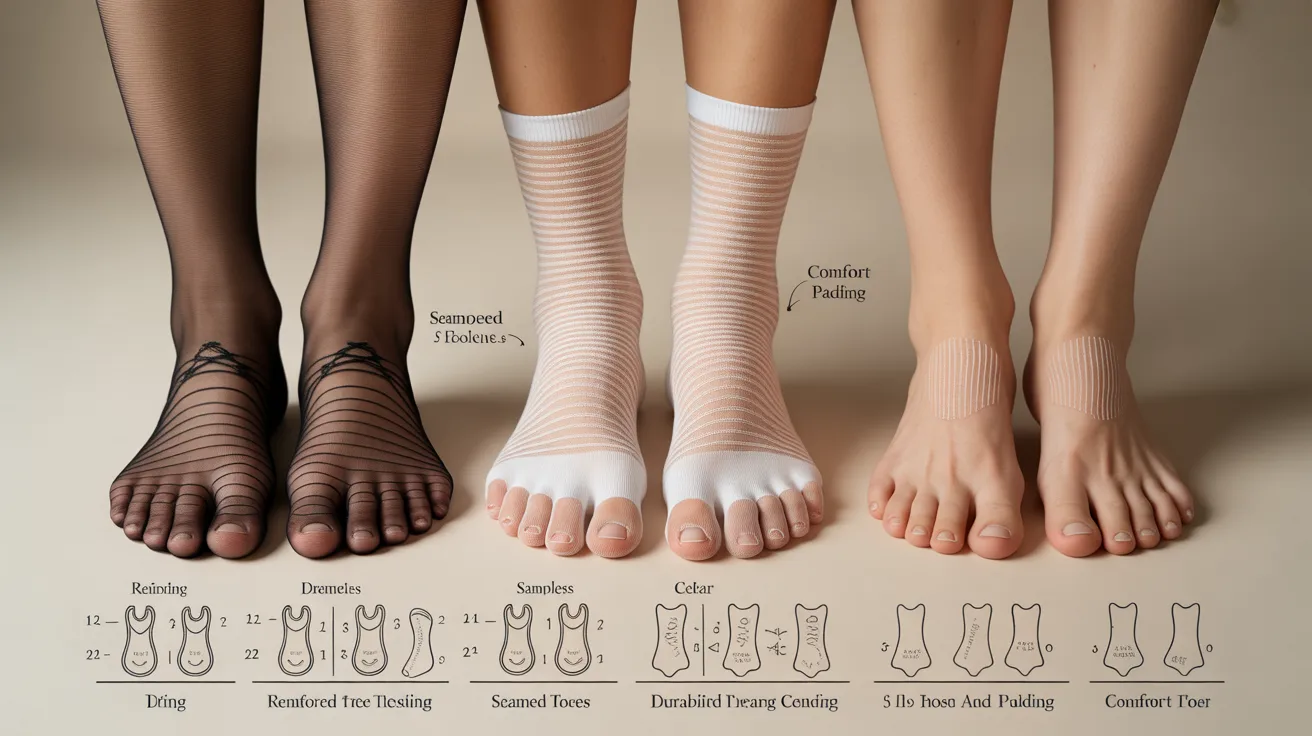
Understanding Stockings Toe Design, Comfort, and Durability
A torn toe in a pair of stockings can ruin a polished look within seconds. The discomfort of tight seams pressing against nails or the embarrassment of visible reinforcement under open shoes are frustrations many wearers recognize. The stockings toe is a small detail, yet it determines comfort, durability, and overall appearance.
Anyone searching for clarity about stockings toe construction usually wants practical answers. Which type lasts longer. Which works with open toe shoes. Why some feel smoother while others bunch up. The difference is rarely accidental. It comes down to fiber density, knitting technique, reinforcement strategy, and finishing.
An informed choice begins with understanding how the stockings toe is engineered. The toe area absorbs more friction than any other section of hosiery. It rubs against footwear, nails, and floor surfaces. Designers compensate with reinforced stitching, denser yarn, or seamless knitting depending on the intended function.
The Anatomy of a Stockings Toe
The structure of a stockings toe reflects both mechanical stress and aesthetic demand. This is the part of hosiery that must endure concentrated pressure while remaining discreet. Manufacturers balance tension control with visual subtlety, particularly in sheer hosiery.
Modern hosiery production often uses circular knitting machines. These machines create a tube of fabric, and the toe is closed either by linking seams or seamless techniques. The method used dramatically influences comfort.
When examining a stockings toe up close, subtle differences become visible. Some designs include a reinforced patch that appears slightly darker. Others blend reinforcement invisibly through micro denier layering. Understanding these differences helps explain why certain pairs last longer.
Reinforced Toe Construction
A reinforced stockings toe contains additional yarn density at the tip. This reinforcement reduces laddering and prevents early runs. It is common in sheer stockings between 15 and 30 denier, where durability must compensate for fine thread.
The darker patch often visible in reinforced styles is not merely decorative. It signals extra knitting cycles in the toe zone. This reinforcement redistributes pressure from toenails and friction points.
For everyday office wear or long shifts spent walking, reinforced stockings toe designs often outperform sheer alternatives. The extra layer provides structural integrity without dramatically altering stretch.
Sheer Toe Design
Sheer stockings toe construction prioritizes invisibility. These designs use consistent denier throughout the garment, eliminating visible reinforcement. The appeal lies in pairing hosiery with open toe heels or sandals.
A sheer stockings toe requires careful nail grooming and properly fitted footwear. Without reinforcement, the fabric is more vulnerable to abrasion. Luxury brands often rely on high quality nylon blends or elastane ratios to compensate for reduced density.
Fashion driven environments, especially formal events or summer styling, often favor sheer toe styles. The clean silhouette allows seamless visual flow from leg to foot.
Seamless and Hand Linked Toe Finishes
Premium hosiery brands sometimes use hand linked toe seams. This technique aligns loops individually rather than stitching them in bulk. The result is a flatter seam that reduces friction across the toes.
Seamless stockings toe designs go a step further. Advanced knitting closes the toe during production, eliminating bulky seams entirely. This innovation improves comfort in tight pumps and stilettos.
Individuals with sensitive skin or those prone to blisters often notice the difference immediately. A smooth stockings toe prevents pressure ridges that can irritate over extended wear.
Why Stockings Toe Durability Matters
The toe area endures more mechanical stress than the calf or thigh. Every step compresses the yarn against the shoe interior. Without sufficient reinforcement, micro tears expand quickly into visible runs.
Durability is not only about cost efficiency. It affects confidence. A compromised stockings toe during a presentation or event can shift focus away from professional presence. Reliability becomes part of personal presentation.
Fiber composition plays a decisive role. Nylon provides strength. Elastane ensures elasticity and recovery. Microfiber blends enhance softness while maintaining resilience. The stockings toe benefits most from these structural considerations.
Denier and Toe Performance
Denier refers to yarn thickness. Lower denier indicates finer, more delicate hosiery. A 10 denier stockings toe looks almost invisible but sacrifices strength. A 40 denier toe offers opacity and durability.
Choosing denier should reflect lifestyle. For office environments, 20 to 30 denier reinforced stockings toe designs offer balance. For evening wear, ultra sheer varieties deliver aesthetic appeal at the cost of longevity.
Testing reveals that reinforced toes can extend garment life by up to 30 percent compared to sheer toe equivalents under identical walking conditions. This performance difference matters for frequent wearers.
Friction, Footwear, and Fabric Stress
Shoe material influences stockings toe wear patterns. Rough leather interiors or unlined pumps increase abrasion. Narrow toe boxes compress yarn fibers repeatedly.
High heels shift weight forward, intensifying pressure on the stockings toe. Flat shoes distribute force more evenly, reducing concentrated stress.
Applying talc or wearing properly trimmed nails can extend hosiery life. Real world wear patterns show that preventive care significantly impacts the durability of the stockings toe.
Temperature and Moisture Impact
Heat softens synthetic fibers. Moisture weakens tension integrity. During summer months, sweat accumulation around toes increases friction inside shoes.
Breathable microfiber blends reduce moisture retention. Some brands integrate cooling yarn technologies to protect the stockings toe from accelerated fiber fatigue.
Regular washing in mild detergent preserves elasticity. Harsh chemicals degrade yarn bonds, particularly at high stress areas like the toe.
Style Considerations and Fashion Context
Hosiery trends shift with fashion cycles. Runway collections in cities like Paris and Milan often reintroduce classic stockings with modern reinterpretations. Toe design adapts accordingly.
Vintage inspired looks from the London fashion scene favor reinforced stockings toe aesthetics as a nod to mid century glamour. Contemporary minimalist styling leans toward sheer toe finishes for seamless leg lines.
Fashion houses such as Chanel have historically paired hosiery with closed toe pumps, making reinforced toe details invisible. In contrast, open toe styling influenced sheer toe demand.
Open Toe Shoes and Hosiery Pairing
The rise of peep toe heels changed consumer expectations. A visible reinforced patch conflicts with open designs. The sheer stockings toe became a wardrobe necessity.
Some stylists suggest nude shade matching to minimize toe contrast. Others embrace tonal consistency between hosiery and shoe for cohesive styling.
Confidence in footwear selection often depends on toe transparency. A poorly matched stockings toe draws unwanted attention.
Professional Dress Codes
Corporate environments frequently require polished attire. In conservative sectors, reinforced stockings toe designs provide security against visible damage.
Financial districts in cities like New York City still maintain traditional hosiery expectations. A durable stockings toe ensures long workdays pass without wardrobe interruptions.
Executive stylists emphasize investing in quality hosiery with reinforced toe zones for reliability during travel and meetings.
Evening Wear and Special Occasions
Formal events prioritize aesthetics. A sheer stockings toe aligns with strappy heels and delicate fabrics.
Photography under flash lighting can reveal reinforcement patches. For red carpet appearances, stylists opt for uniform sheer toe construction.
The choice ultimately depends on context. Durability or invisibility becomes the deciding factor.
Practical Comparison of Stockings Toe Types
Below is a practical overview comparing common toe constructions across performance and styling criteria.
| Toe Type | Visibility Under Open Shoes | Durability Level | Comfort in Tight Shoes | Ideal Use Setting |
|---|---|---|---|---|
| Reinforced Toe | Visible Patch | High | Moderate | Office and Daily Wear |
| Sheer Toe | Invisible | Moderate | High | Formal Events |
| Sandal Toe | Fully Transparent | Moderate | High | Open Toe Footwear |
| Seamless Toe | Invisible Seam | Moderate to High | Very High | Sensitive Skin |
| Microfiber Reinforced | Slight Tint | Very High | High | Long Walking Days |
Each stockings toe variation addresses specific needs. Selection should reflect lifestyle demands, footwear habits, and aesthetic preference.
Care and Maintenance for Long Lasting Stockings Toe
Hosiery longevity begins before the first wear. Inspecting nails for rough edges prevents immediate snags in the stockings toe.
Hand washing in cool water preserves elasticity. Machine agitation stresses fibers, particularly at seam closures. Drying flat maintains structural alignment.
Storage also matters. Folding stockings loosely rather than rolling tightly prevents pressure creases at the toe. Small habits influence garment lifespan more than most realize.
Preventing Runs at the Toe
Applying clear nail polish to minor snags can halt expansion. This quick fix stabilizes the stockings toe temporarily.
Rotating multiple pairs reduces repeated stress on a single garment. Alternating wear allows fibers to recover tension.
High quality hosiery often incorporates ladder resistant technology. These advanced yarns localize tears, preventing full length runs.
When to Replace Hosiery
Thinning fabric at the stockings toe signals structural fatigue. Transparency inconsistencies indicate fiber breakdown.
Professional appearance relies on intact hosiery. Even subtle damage can become visible under bright lighting.
Investing in reliable brands reduces frequent replacement cycles. Cost per wear decreases with durable construction.
Fabric Technology and Innovation
Textile engineering has transformed hosiery. Micro denier nylon, Lycra blends, and reinforced knit patterns redefine expectations for stockings toe performance.
Research in fiber elasticity demonstrates that balanced stretch ratios reduce tension concentration at the toe. Controlled elasticity prevents overstretching during walking.
Some European manufacturers experiment with double wrapped elastane in toe zones. This technique enhances recovery without adding bulk.
Sustainability and Material Sourcing
Environmental awareness influences hosiery production. Recycled nylon reduces ecological impact while maintaining performance standards.
Sustainable manufacturing practices in regions like Italy support high quality craftsmanship. Ethical sourcing does not compromise stockings toe durability when executed correctly.
Consumers increasingly prioritize transparency in material composition. Longevity itself contributes to sustainability by reducing disposal frequency.
FAQs About Stockings Toe
What is the difference between reinforced and sheer stockings toe
A reinforced stockings toe contains extra yarn density at the tip for durability, while a sheer stockings toe maintains uniform transparency for aesthetic purposes. The choice depends on whether strength or invisibility is more important.
Can stockings toe designs work with open toe heels
Yes, sandal or sheer stockings toe styles are specifically designed for open toe footwear. Reinforced versions may show through and disrupt the visual line.
Why do stockings tear at the toe first
The stockings toe absorbs concentrated friction from walking and shoe pressure. Toenails and narrow toe boxes increase stress in that area.
How can I make my stockings toe last longer
Keeping nails smooth, choosing properly fitted shoes, and washing hosiery gently all extend the life of the stockings toe.
Is higher denier always better for toe durability
Higher denier increases thickness and strength, but reinforced lower denier options can provide similar durability with a lighter appearance.
Are seamless stockings toe styles more comfortable
Many wearers find seamless stockings toe designs more comfortable in tight shoes because there is no bulky seam pressing against the toes.
Closing Perspective on Stockings Toe Selection
The stockings toe may appear minor, yet it determines comfort, resilience, and style compatibility. Attention to toe construction separates disposable hosiery from dependable wardrobe staples.
Understanding fiber composition, denier balance, reinforcement strategy, and footwear interaction transforms purchasing decisions. Thoughtful selection prevents frustration and protects presentation in professional and social settings.
Quality hosiery reflects craftsmanship. When the stockings toe performs well, the entire garment supports confidence from the first step to the last.