Understanding https//g.co/verifyaccount and How Google Account Verification Really Works
You open your inbox and see a message asking you to confirm your Google Account. The link points to https//g.co/verifyaccount. Your first reaction is hesitation. Is it legitimate. Is someone trying to access your account. Or is this part of Google’s security process.
That moment of uncertainty is exactly why understanding https//g.co/verifyaccount matters. Account verification links can protect you or expose you depending on how they are used. Many users search for https//g.co/verifyaccount after receiving an unexpected email or security alert. They want clarity and reassurance before clicking anything.
This article breaks down what https//g.co/verifyaccount represents, how Google verification flows work behind the scenes, when the link is safe, and how to protect yourself from phishing attempts that mimic it. You will gain real operational knowledge instead of surface level advice.
What Is https//g.co/verifyaccount and Why Google Uses It
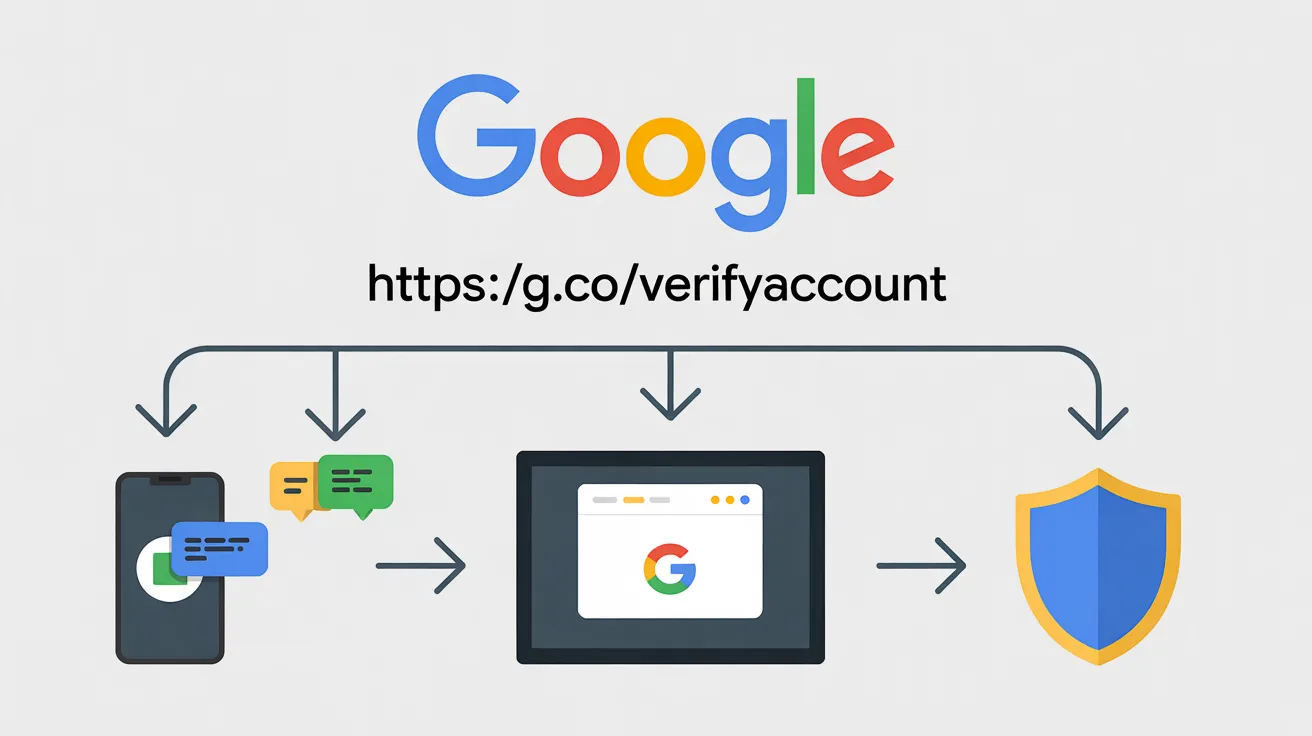
Google uses shortened domains such as g.co to manage redirections securely. The link https//g.co/verifyaccount functions as a controlled gateway that directs users to official Google verification pages. It is not a random domain. It is owned and operated by Google itself.
The purpose of https//g.co/verifyaccount is straightforward. It confirms your identity when Google detects new device logins, unusual activity, password resets, or security changes. If you sign in from a new location or device, Google may require verification through this link to ensure you are the legitimate account holder.
Many security systems use verification URLs, but Google relies heavily on structured identity checkpoints. https//g.co/verifyaccount acts as a bridge between your notification and the secure verification interface. When legitimate, it redirects to official Google domains such as accounts.google.com.
Users often discover https//g.co/verifyaccount after receiving alerts tied to Gmail, Google Drive, YouTube, or Google Ads. The link plays a role in the broader Google Account security ecosystem which includes two factor authentication, recovery email checks, and device approvals.
Understanding the architecture behind https//g.co/verifyaccount helps reduce panic. A short link does not automatically mean fraud. It signals redirection which Google uses to streamline internal routing.
When You Should Expect to See https//g.co/verifyaccount
Seeing https//g.co/verifyaccount unexpectedly can be alarming. Context matters. Google triggers account verification in specific scenarios.
Suspicious Login Attempts
If Google detects login activity from a new IP address, a different country, or an unrecognized browser fingerprint, it may send an alert containing https//g.co/verifyaccount. This is part of adaptive authentication. The system evaluates behavioral patterns rather than just passwords.
Security algorithms analyze login timing, device history, and session cookies. When something deviates from your normal usage, Google sends verification prompts. The link https//g.co/verifyaccount ensures you can confirm or deny the attempt quickly.
Users who travel frequently often encounter these prompts. A hotel WiFi network in another country can trigger the same alert as a suspicious attempt. That does not mean your account is compromised. It means Google is cautious.
Password Reset Requests
If you initiate a password reset, Google may send confirmation through https//g.co/verifyaccount. This validates that you control the recovery email or phone number associated with the account.
The verification link confirms ownership before allowing credential updates. This prevents attackers from resetting passwords without access to your recovery channel.
Many phishing emails attempt to mimic password reset notifications. That is why recognizing legitimate https//g.co/verifyaccount behavior is critical. Real Google emails use consistent formatting and secure headers.
Account Recovery and Two Factor Setup
When enabling two factor authentication or recovering access after forgetting credentials, you may encounter https//g.co/verifyaccount. This ensures identity verification before sensitive changes are applied.
Google integrates this link within a larger authentication process that includes SMS codes, security keys, or app based verification through Google Authenticator.
The role of https//g.co/verifyaccount in these scenarios is to centralize secure redirection rather than expose long URLs in emails.
How to Verify If https//g.co/verifyaccount Is Legitimate
Security awareness requires practical evaluation skills. Not every email containing https//g.co/verifyaccount is authentic. Phishing actors replicate official formats.
Check the Redirect Destination
Hover over the link without clicking. A legitimate https//g.co/verifyaccount should redirect to a Google domain such as accounts.google.com. If the redirect leads to a strange domain, stop immediately.
Domain structure matters more than visual design. Attackers often create lookalike sites that appear identical to Google login pages.
Opening the link in a secure browser window and checking the address bar certificate helps confirm authenticity. Google pages display HTTPS encryption and valid certificates issued to Google LLC.
Review the Sender Header
Inspect the email header details. Authentic messages originate from Google domains such as google.com. Advanced users can view full headers to confirm DKIM and SPF authentication.
Phishing messages often contain minor domain alterations. A subtle character change can redirect you to malicious infrastructure.
The presence of https//g.co/verifyaccount does not automatically guarantee legitimacy. Verification must include sender validation.
Cross Check Inside Your Google Account
A safe method involves navigating directly to your Google Account dashboard without clicking the email link. Log in manually through the official site.
If there is a real security alert, it will appear inside your account activity section. If nothing appears, the email may be fraudulent.
This direct verification approach reduces reliance on email links while still addressing potential security events tied to https//g.co/verifyaccount.
The Security Architecture Behind Google Verification Links
Google operates one of the largest identity systems in the world. Billions of accounts rely on layered protection.
The link https//g.co/verifyaccount fits into a multi layer authentication model that includes machine learning risk scoring. Each login request receives a dynamic trust score based on historical data.
Google’s systems analyze device IDs, browser versions, typing cadence, and login timing. If the risk score crosses a threshold, verification is triggered. That trigger may include https//g.co/verifyaccount.
Below is a structured overview of common verification scenarios associated with this link.
| Trigger Event | Risk Level | User Action Required | Google Security Layer | Outcome After Verification |
|---|---|---|---|---|
| New device login | Medium | Confirm via link | Device fingerprint check | Device added as trusted |
| Foreign IP access | High | Identity confirmation | Behavioral anomaly scan | Access restored |
| Password reset request | Medium | Confirm ownership | Recovery channel check | Password updated |
| Two factor activation | Low | Approve configuration | Multi factor binding | Extra security enabled |
| Suspicious session cookie | High | Re authentication | Session integrity review | Session refreshed |
Each row demonstrates how https//g.co/verifyaccount integrates within a broader protection mechanism rather than operating in isolation.
Risks Associated With Fake https//g.co/verifyaccount Links
Cybercriminals rely on urgency and fear. Emails stating your account will be disabled within hours create pressure.
Fake https//g.co/verifyaccount links often contain slight spelling changes or redirect through compromised servers. Some use URL shorteners to mask final destinations.
The biggest danger is credential harvesting. When users enter passwords on fake pages, attackers gain immediate access to Gmail, Google Photos, and linked services.
Another risk involves session hijacking. Malicious scripts can capture authentication tokens if users interact with compromised pages.
Understanding these tactics empowers you to treat every https//g.co/verifyaccount message with analytical caution instead of emotional reaction.
Practical Actions to Strengthen Google Account Security
Knowledge reduces vulnerability but proactive measures build resilience.
Activate two factor authentication if not already enabled. This adds an independent verification layer beyond passwords. Security keys provide the highest protection level.
Regularly review account activity logs. Google provides visibility into recent devices and login attempts. Monitoring this section helps you identify suspicious patterns early.
Use strong unique passwords stored in a reputable password manager. Credential reuse across platforms increases exposure if another service is breached.
If you suspect a fake https//g.co/verifyaccount attempt, report the email through Gmail’s phishing reporting feature. This contributes to Google’s threat detection system.
Why Google Uses Short Domains Like g.co
Short domains improve deliverability and clarity in communication. Long URLs can break in email formatting. A concise redirect link like https//g.co/verifyaccount ensures consistent routing.
The domain g.co is exclusively reserved for official Google URL shortening. It is not available for public use. That exclusivity enhances trust when properly validated.
Search behavior shows many users typing https//g.co/verifyaccount directly into browsers after receiving emails. This indicates a strong intent to confirm legitimacy before engagement.
The link also supports localization. Depending on region, https//g.co/verifyaccount may redirect users to language specific verification pages while maintaining centralized security controls.
Frequently Asked Questions About https//g.co/verifyaccount
Is https//g.co/verifyaccount always safe to click
It can be safe if the email originates from an authentic Google domain and the redirect leads to official Google pages. Verification requires checking sender details and URL behavior.
Why did I receive https//g.co/verifyaccount without logging in
Google may detect attempted access by someone else. The alert could indicate a blocked login attempt rather than your own activity.
Can attackers fake https//g.co/verifyaccount emails
Yes. Phishing campaigns often replicate official formatting. Always verify headers and avoid entering credentials on suspicious pages.
Does https//g.co/verifyaccount mean my account was hacked
Not necessarily. It often signals a precaution triggered by unusual activity. Reviewing account logs clarifies the situation.
What should I do if I clicked a suspicious link
Change your password immediately from the official Google site. Enable two factor authentication and review recent account activity for unknown sessions.
Can I ignore https//g.co/verifyaccount messages
Ignoring them is risky if the alert is legitimate. Log in directly to your Google Account and check for security notifications before deciding.
Building Long Term Digital Vigilance
Account verification links like https//g.co/verifyaccount are part of modern identity protection. They reflect a balance between convenience and risk mitigation.
Digital security requires pattern recognition. When you understand how Google structures its authentication ecosystem, you respond with logic instead of fear.
The presence of https//g.co/verifyaccount should trigger evaluation rather than panic. Look at context. Validate sources. Confirm through official dashboards.
Trust in digital environments grows from knowledge and repeated verification habits. A user who understands https//g.co/verifyaccount and its role in Google’s infrastructure becomes significantly harder to deceive.
Staying informed about how identity verification works protects not just one account but your broader digital footprint. Google accounts connect to banking alerts, work documents, and personal archives. Protecting them demands awareness grounded in real operational understanding.
https//g.co/verifyaccount is not just a link. It represents a checkpoint in one of the most advanced identity systems operating globally. When treated with informed caution, it becomes a safeguard rather than a threat.