Understanding the True Value Behind Gold Stamp Replicas
Collectors often encounter beautifully framed gold stamp displays and wonder whether they are hidden treasures or decorative keepsakes. Confusion surrounding golden replicas of United States stamps is common, especially when sellers use language that suggests rarity or historical significance. Many buyers only discover years later that these pieces function very differently from authentic postage stamps.
The interest in golden replicas of United States stamps continues to grow because they sit at the intersection of philately, collectibles marketing, and precious metal appeal. They look impressive. They carry familiar patriotic imagery. They are often marketed with certificates and display cases that elevate perceived importance.
Yet the question remains the same for most readers. What are golden replicas of United States stamps really worth, and how should collectors approach them?
This article addresses that question with depth, historical context, and practical clarity drawn from long observation of the collectibles market.
What Are Golden Replicas of United States Stamps
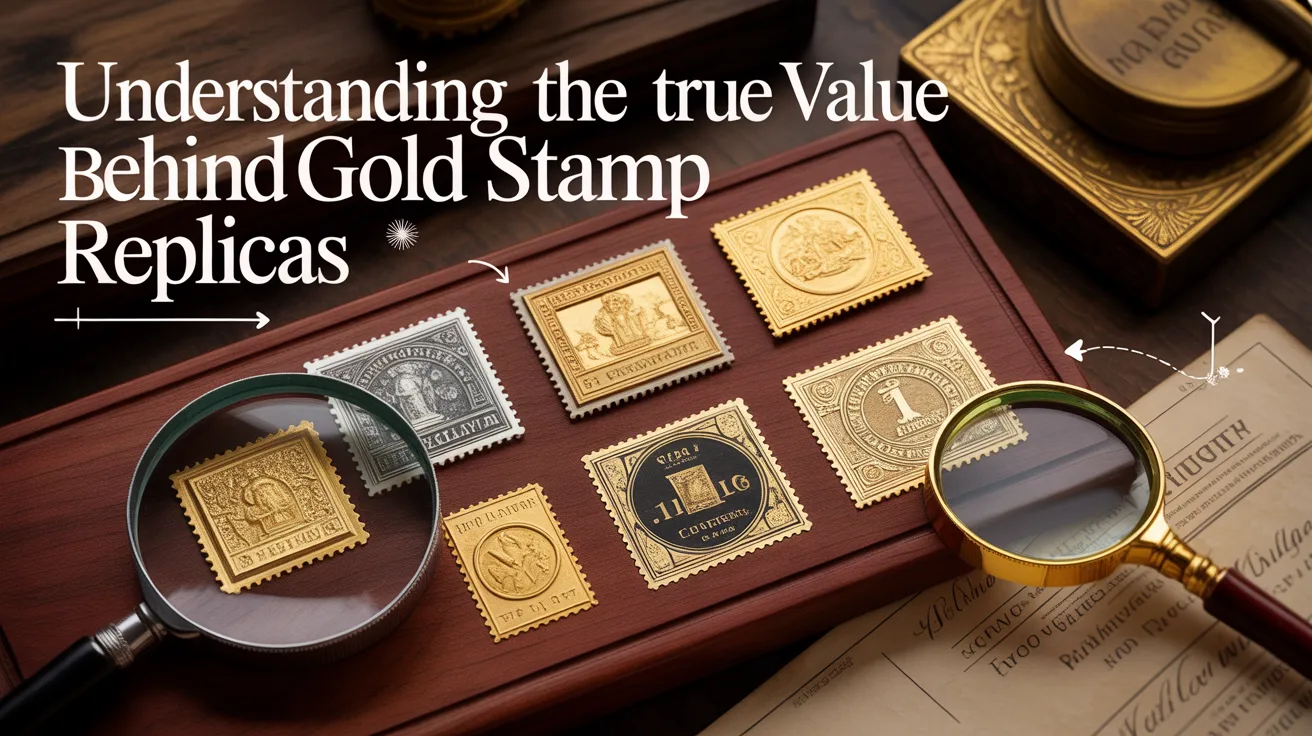
Golden replicas of United States stamps are decorative reproductions of genuine U.S. postage stamps, typically layered or plated in a thin coating of gold. They are not valid for postage, and they are not original issues produced by the United States Postal Service. Instead, they are privately manufactured collectibles.
Most golden replicas of United States stamps replicate classic designs such as historical commemoratives, presidential portraits, or patriotic themes. Popular subjects often include iconic American imagery and well-known definitive stamps that hold emotional resonance among collectors.
From a manufacturing standpoint, these replicas are usually minted in a base metal such as brass or copper and then coated with a microscopic layer of 22-karat or 24-karat gold. The gold content is typically minimal. While advertisements sometimes emphasize gold purity, the quantity of gold involved is extremely small.
How They Differ from Authentic U.S. Postage Stamps
Authentic U.S. postage stamps are issued directly by the United States Postal Service and are printed using specialized security techniques. They hold postal validity at the time of issue and can gain collector value depending on rarity, condition, and demand.
Golden replicas of United States stamps, by contrast, are commemorative reproductions. They do not hold postal authority. They are not listed in major philatelic catalogs as official issues. They are produced for the collectibles market rather than for postal circulation.
This distinction is central to understanding market value. In philately, authenticity and postal history drive pricing. In replica collectibles, aesthetic appeal and marketing drive pricing.
The Companies Behind Gold Stamp Replicas
Several private minting companies began producing golden replicas of United States stamps during the 1970s and 1980s, when collectibles marketing surged in the United States. Advertisements frequently appeared in magazines and mail-order catalogs.
These companies positioned their products as heirloom-quality commemoratives. Packaging often included velvet-lined cases, certificates of authenticity, and numbered series designs. The visual presentation contributed to perceived prestige.
Collectors who acquired golden replicas of United States stamps during this era often did so as gifts, patriotic displays, or speculative investments. Market experience over decades has revealed important insights about how these items perform financially.
The History and Rise of Gold-Plated Stamp Replicas
The boom in golden replicas of United States stamps reflects broader cultural trends in American collecting. The 1970s saw rapid growth in coin collecting, limited edition plates, and commemorative medals. Precious metal marketing gained traction during periods of inflation and economic uncertainty.
Stamp imagery carried strong emotional weight. American commemoratives often depict presidents, wars, cultural milestones, and national symbols. Transforming those designs into gold-plated collectibles appealed to buyers seeking tangible patriotic memorabilia.
During the height of production, some series featured dozens of golden replicas of United States stamps covering themes such as American history, wildlife, transportation, and space exploration. Marketing materials frequently suggested limited mintages, even though production quantities were often higher than traditional rare collectibles.
Influence of Precious Metal Marketing
Gold has long symbolized permanence and value. The presence of gold plating, even in microscopic amounts, allowed advertisers to highlight intrinsic worth. For new collectors, this combination of gold and government imagery created an impression of long-term investment potential.
Experience in secondary markets shows a different reality. Precious metal value depends on weight and purity. In most golden replicas of United States stamps, the gold layer is extremely thin, contributing little melt value. The base metal underneath represents the majority of the object’s mass.
Understanding that difference protects buyers from inflated expectations.
Philatelic Community Response
Serious stamp collectors often distinguish clearly between genuine philatelic material and privately issued replicas. Organizations such as the American Philatelic Society emphasize authenticity, condition, and documented postal history as the foundation of value.
Within the philatelic community, golden replicas of United States stamps are generally categorized as non-postal collectibles. They may appeal to decorative collectors, but they do not carry the same prestige as rare originals like the Inverted Jenny, which remains one of the most famous U.S. stamp errors in existence.
This separation explains why resale values often diverge sharply from original purchase prices.
Market Value and Investment Reality
Anyone researching golden replicas of United States stamps eventually confronts the question of resale value. The answer requires nuance rather than optimism.
Secondary market data from estate sales, auction platforms, and coin shops reveals consistent patterns. Individual golden replicas of United States stamps typically sell for modest amounts. Framed sets sometimes command slightly higher prices when presentation is intact and aesthetically appealing.
The core reason lies in supply and demand. Large quantities were produced relative to the size of the serious collector base. Unlike scarce error stamps or limited coin mintages, many replica series were widely distributed.
Understanding Gold Content Versus Collector Value
Gold value is determined by weight multiplied by purity. In most golden replicas of United States stamps, the gold plating measures only microns thick. When melted, the recoverable gold is minimal and often economically impractical to extract.
Collector value relies on desirability and rarity. Since golden replicas of United States stamps were marketed broadly and preserved in protective cases, high-grade examples remain common.
That dynamic keeps market prices stable but relatively low compared to original expectations.
Secondary Market Performance
Estate professionals frequently encounter golden replicas of United States stamps in inherited collections. Families sometimes assume substantial intrinsic value due to gold content or original sales documentation.
Actual resale results often reflect decorative value rather than investment return. Buyers tend to include patriotic memorabilia collectors, gift purchasers, and individuals who appreciate framed displays.
The gap between marketing language and resale performance underscores the importance of research before purchase.
Identifying Authentic Gold Stamp Replicas
Not all golden replicas of United States stamps are identical in construction or branding. Some are individually mounted with serial numbers, while others form complete thematic sets.
Experienced evaluators begin by inspecting weight, metal composition, and documentation. Certificates often list gold purity, though they rarely specify total gold weight in grams. That omission can be revealing.
Condition plays a secondary role. Scratches, tarnish on exposed base metal, and damaged display frames reduce visual appeal. Since many golden replicas of United States stamps were stored carefully, pristine examples remain common.
Signs of Marketing Language Versus Investment Grade
Phrases such as limited edition or museum quality appear frequently in promotional materials. Within traditional numismatics or philately, those terms carry precise definitions tied to mint records and grading standards.
In the world of golden replicas of United States stamps, such phrases function primarily as marketing descriptors. They do not necessarily indicate scarcity in the broader market.
Understanding that distinction protects buyers from inflated assumptions.
Comparison Table: Gold Replicas Versus Authentic Stamps
Below is a practical comparison outlining core differences between golden replicas of United States stamps and genuine postal issues.
| Feature | Golden Replicas of United States Stamps | Authentic U.S. Stamps | Gold Bullion Coins | Commemorative Medals | Rare Error Stamps |
|---|---|---|---|---|---|
| Issuer | Private Mint | United States Postal Service | Government Mint | Private or Government | United States Postal Service |
| Postal Validity | No | Yes at Issue | No | No | Yes at Issue |
| Gold Content | Thin Plating | None | Solid Gold | Usually None | None |
| Collector Base | Decorative Collectors | Philatelists | Investors | Mixed Collectors | Advanced Philatelists |
| Typical Resale Range | Modest | Varies Widely | Metal Spot Value | Modest | High if Rare |
This table clarifies why golden replicas of United States stamps occupy a distinct niche separate from core philately or bullion investment.
Are Golden Replicas of United States Stamps Worth Buying
Value depends on intent. Buyers motivated by decorative appeal often find satisfaction in the visual presentation. Framed displays featuring historic American imagery can complement home or office decor.
Collectors seeking appreciation comparable to scarce stamps or gold bullion frequently experience disappointment. The resale market for golden replicas of United States stamps remains relatively stable but limited.
Those considering purchase should evaluate price against personal enjoyment rather than speculative growth.
When They Make Sense as Collectibles
Golden replicas of United States stamps may hold appeal for history enthusiasts who appreciate stamp design but prefer durable metal displays over fragile paper.
They also serve as accessible entry points for individuals curious about philately but hesitant to invest heavily in rare originals. In that context, enjoyment rather than return becomes the primary measure of success.
Preservation and Display Considerations
Despite being metal, golden replicas of United States stamps still require proper care. Exposure to humidity can affect base metal components. Display cases should remain dry and free from excessive heat.
Direct sunlight may cause fading in accompanying certificates or background materials. Maintaining original packaging often preserves resale potential, even if modest.
Collectors who treat golden replicas of United States stamps as decorative heirlooms rather than investment vehicles typically report higher satisfaction.
Frequently Asked Questions
What exactly are golden replicas of United States stamps made from?
Most golden replicas of United States stamps consist of a base metal such as brass or copper coated with a thin layer of high-purity gold. The gold layer is usually microscopic and adds aesthetic appeal rather than substantial intrinsic value.
Do golden replicas of United States stamps contain real gold?
Yes, they typically contain real gold plating. The quantity is extremely small, which limits melt value. The presence of gold does not automatically translate into high resale prices.
Are golden replicas of United States stamps considered rare?
In most cases, no. Production numbers were relatively high during peak marketing years. Availability on secondary markets reflects steady supply rather than scarcity.
Can golden replicas of United States stamps increase in value over time?
Appreciation has historically been limited. While pristine complete sets may sell for more than individual pieces, dramatic increases comparable to rare error stamps are uncommon.
How can I sell golden replicas of United States stamps?
Common resale channels include auction platforms, estate sales, coin shops, and memorabilia dealers. Pricing research based on recent completed sales provides realistic expectations.
Are golden replicas of United States stamps the same as rare philatelic items?
No. Genuine philatelic rarities issued by the United States Postal Service differ fundamentally from privately minted replicas. Market demand and valuation criteria reflect that difference.
Closing Perspective on Gold Stamp Replicas
Golden replicas of United States stamps occupy a unique corner of the collectibles landscape. They combine patriotic imagery, precious metal appeal, and late twentieth-century marketing culture. Their beauty and craftsmanship can still resonate decades after production.
Clarity about their nature transforms disappointment into informed appreciation. When approached as decorative commemoratives rather than financial assets, golden replicas of United States stamps can hold meaningful personal value.
Collectors who understand the distinction between marketing promise and market reality approach acquisitions with confidence grounded in knowledge. That foundation remains the strongest asset in any collecting journey.