Blanton’s Gold Bourbon: Rarity, Flavor, and Collector Appeal
Few bottles in American whiskey create the same mix of anticipation and frustration as Blanton’s Gold. Enthusiasts hunt it across borders. Collectors debate its allocation patterns. Casual drinkers wonder if it truly tastes different from the standard single barrel release. The mystique is real, but so are the questions.
When someone searches for Blanton’s Gold, they are rarely looking for marketing copy. They want clarity. Is it worth the premium price. Why is it hard to find in the United States. How does it compare to other Buffalo Trace offerings. What makes it distinct beyond the gold label and polished presentation.
Blanton’s Gold sits in a space between prestige and performance. It carries history, carries proof, and carries expectation. Understanding it requires more than tasting notes. It requires context, from production details to global distribution strategy, and from barrel selection to collector psychology.
The Origins and Evolution of Blanton’s Gold
Blanton’s Gold cannot be understood without first understanding the distillery behind it. The brand originates from the historic Buffalo Trace Distillery, one of the oldest continuously operating distilleries in the United States. That lineage alone shapes perception and trust.
The Birth of Single Barrel Prestige
The Blanton’s line traces its heritage to Colonel Albert B. Blanton, a former president of the distillery. The modern single barrel concept was introduced in the 1980s under master distiller Elmer T. Lee. The idea was radical for its time. Instead of blending barrels for consistency, each bottle would represent one specific barrel.
Blanton’s Gold emerged as a higher proof expression, typically bottled at 103 proof for international markets. That elevated proof level was not accidental. It allowed more texture, more oak extraction, and more aromatic intensity compared to the standard 93 proof version.
Collectors often describe Blanton’s Gold as the “international upgrade.” For years, it was primarily distributed outside the United States. This created scarcity at home and elevated its status. Scarcity shapes narrative in the whiskey world, and Blanton’s Gold benefited from that dynamic.
Global Allocation and Market Perception
Blanton’s Gold developed a reputation as an export treasure. Markets in Europe and Asia saw regular allocations while American consumers often relied on travel retail or secondary markets.
This uneven distribution influenced pricing psychology. When something feels out of reach domestically, demand increases. Blanton’s Gold became a bottle travelers would bring back in suitcases from London or Tokyo.
That scarcity narrative continues to affect how people perceive value. In some markets, Blanton’s Gold retails close to its intended price. In others, it trades at multiples of retail. The bourbon itself has not changed. The market has.
Position Within the Blanton’s Lineup
Blanton’s Gold sits between the standard Single Barrel and the barrel strength release often labeled Straight From The Barrel. The proof point places it in a balanced category. It is strong enough to deliver concentrated flavor but approachable without dilution.
Enthusiasts often compare Blanton’s Gold to other premium offerings from Buffalo Trace Distillery such as Eagle Rare and George T. Stagg. Each serves a different purpose. Blanton’s Gold is about refinement within a single barrel format rather than raw power or extended aging.
Understanding its position clarifies expectations. It is not designed to overpower. It is crafted to showcase precision and barrel selection at a slightly elevated intensity.
Production Details and Barrel Selection
Serious bourbon drinkers want specifics. Mash bill. Aging conditions. Warehouse placement. These factors influence whether Blanton’s Gold performs as more than a collectible.
Blanton’s Gold uses Buffalo Trace’s Mash Bill No. 2, a high rye bourbon mash bill. While the exact rye percentage is proprietary, it is higher than many traditional Kentucky bourbons. That rye component introduces spice and structure.
Warehouse H and Single Barrel Identity
Blanton’s barrels are typically drawn from Warehouse H, a metal-clad structure that experiences greater temperature variation than brick warehouses. That variation accelerates interaction between spirit and wood.
Temperature swings cause the whiskey to expand into the oak during heat and contract during cooler periods. This cyclical movement increases extraction of vanillin, caramelized sugars, and tannins. Blanton’s Gold often shows amplified oak character compared to the lower proof expression.
Single barrel format means variation is inevitable. Two bottles of Blanton’s Gold may differ in sweetness, spice intensity, or oak integration. That unpredictability is part of its appeal.
Proof and Flavor Impact
At 103 proof, Blanton’s Gold carries enough alcohol strength to retain aromatic compounds. Lower proof whiskies can sometimes mute complexity. Higher proof can overwhelm subtler notes.
In tasting sessions, Blanton’s Gold often reveals honeyed caramel, toasted oak, dried orange peel, and baking spice. The rye element expresses as clove and cracked black pepper. The finish tends to be medium to long, with lingering spice and subtle sweetness.
This proof point strikes a middle ground. It is expressive without requiring water. For many enthusiasts, that balance defines its drinkability.
Quality Control and Consistency
Single barrel does not mean random selection. Barrels for Blanton’s Gold are selected for a profile that meets brand standards. That selection process maintains overall identity while preserving uniqueness.
Distillery teams evaluate aroma, balance, and structure before approving a barrel for gold label release. This curation contributes to its premium status.
Blanton’s Gold is not an experiment. It is a controlled variation within a disciplined production system.
Tasting Profile and Sensory Experience
Tasting Blanton’s Gold side by side with other expressions reveals nuance that casual drinkers might miss. The difference is not only in proof but in texture and aromatic concentration.
Nose and Aromatic Complexity
On the nose, Blanton’s Gold typically opens with sweet caramel and butterscotch. As it rests in the glass, deeper layers appear. Toasted oak, orange zest, and faint dark cherry develop gradually.
The higher proof carries volatile compounds upward. That aromatic lift creates dimension. Some barrels lean toward baking spice. Others reveal more floral or citrus notes.
Glassware matters. In a tulip-shaped glass, Blanton’s Gold expresses more focused aromatics. In a rocks glass, it feels broader but slightly less detailed.
Palate Structure and Balance
The first sip often delivers a wave of honeyed sweetness followed by rye-driven spice. Oak tannins provide grip without harsh bitterness when the barrel is well integrated.
Texture is one of its strengths. Blanton’s Gold feels viscous but not syrupy. The alcohol warmth builds gradually rather than striking sharply.
Comparisons with the standard single barrel often highlight increased intensity. Flavors seem more defined. Edges feel sharper in a positive sense, offering clarity rather than aggression.
Finish and Aftertaste
The finish extends longer than many mid-proof bourbons. Spiced oak and light tobacco linger. A subtle sweetness remains at the back of the palate.
When evaluating Blanton’s Gold critically, the question becomes less about whether it is good and more about whether it justifies its market premium. From a sensory standpoint, it delivers refinement and concentration that serious enthusiasts appreciate.
Pricing, Rarity, and Secondary Market Dynamics
Blanton’s Gold occupies a complex pricing environment. Suggested retail prices are often reasonable compared to secondary market figures.
Collectors sometimes pay double or triple retail in regions where supply is limited. This phenomenon is not unique to Blanton’s Gold. Many allocated bourbons from Buffalo Trace Distillery experience similar inflation.
The table below offers a practical comparison of Blanton’s expressions and related attributes.
| Expression | Proof | Mash Bill | Typical Retail Range | Availability Level |
|---|---|---|---|---|
| Blanton’s Original | 93 | Mash Bill No.2 | Moderate | Limited |
| Blanton’s Gold | 103 | Mash Bill No.2 | Premium | Highly Limited |
| Straight From Barrel | 120+ | Mash Bill No.2 | High Premium | Very Limited |
| Special Reserve | 80 | Mash Bill No.2 | Accessible | Moderate |
| Store Pick Gold | 103 | Mash Bill No.2 | Premium Plus | Rare |
Pricing reflects more than production cost. It reflects demand, brand mythology, and distribution patterns. Blanton’s Gold benefits from all three.
Buyers seeking fair pricing often cultivate relationships with specialty retailers. International travel retail can sometimes offer better value than domestic secondary markets.
How Blanton’s Gold Compares to Other Premium Bourbons
Context strengthens purchasing decisions. Comparing Blanton’s Gold to other respected bourbons clarifies its unique appeal.
Within the Buffalo Trace portfolio, Eagle Rare emphasizes age statement and oak maturity. George T. Stagg emphasizes barrel proof intensity. Blanton’s Gold emphasizes curated single barrel refinement at elevated proof.
Outside that portfolio, high proof single barrel bourbons from independent bottlers can offer similar intensity but lack the heritage narrative attached to Blanton’s Gold.
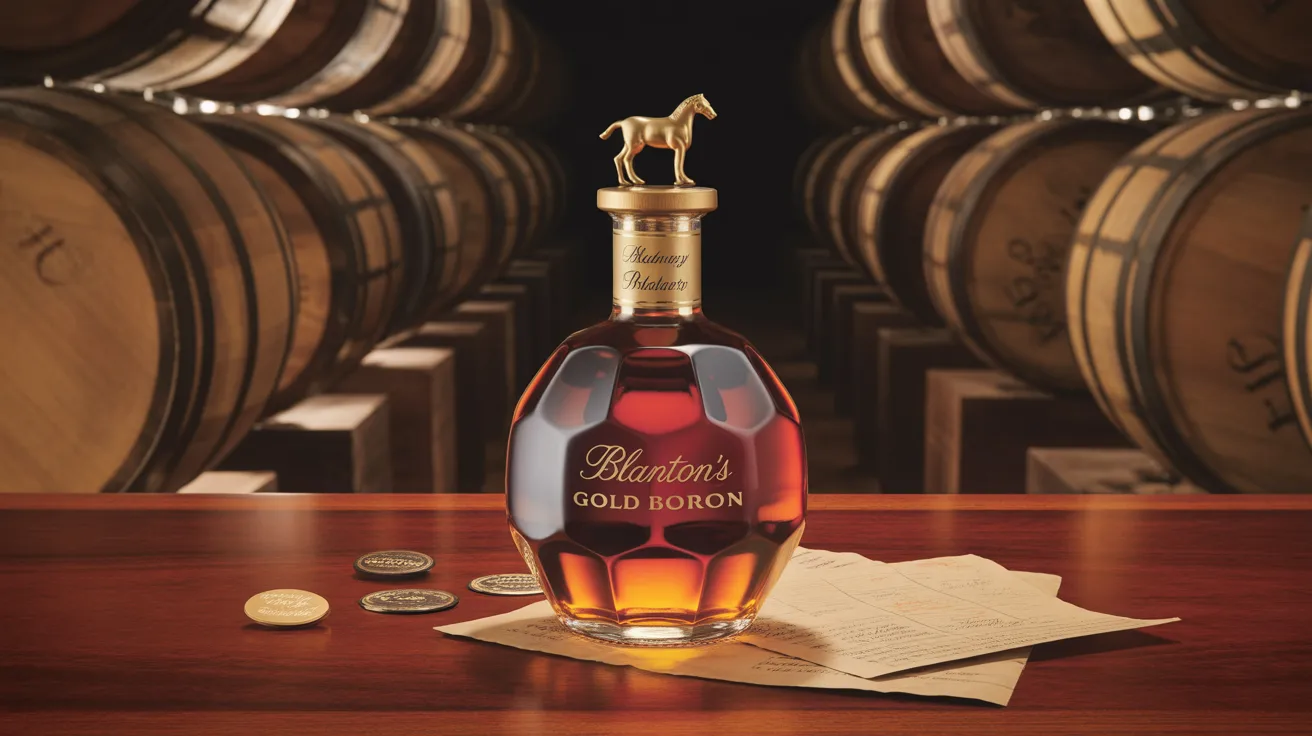
Blanton’s Gold balances legacy, presentation, and sensory performance. The horse stopper, engraved bottle, and gold label reinforce its premium positioning. Presentation influences perception, yet the liquid must support the story. In most well selected barrels, it does.
Collectibility and Long Term Value
Collectors view Blanton’s Gold through a dual lens. One is appreciation potential. The other is drinking experience.
Bottle condition, box presence, and stopper letters affect resale value. Enthusiasts often aim to collect the full set of horse stoppers that spell the brand name.
Market volatility remains a reality. Prices fluctuate based on allocation shifts and global demand. Blanton’s Gold has maintained strong interest due to brand recognition and limited distribution.
From a drinking standpoint, many collectors ultimately open their bottles. Whiskey exists to be tasted. Blanton’s Gold offers enough complexity to justify that decision.
Frequently Asked Questions About Blanton’s Gold
Is Blanton’s Gold worth the higher price compared to the standard version?
Blanton’s Gold delivers greater proof and often more concentrated flavor. Whether that justifies the premium depends on personal preference and local pricing. At fair retail, many enthusiasts consider it a worthwhile upgrade. At inflated secondary prices, value becomes subjective.
Why is Blanton’s Gold hard to find in the United States?
Distribution strategies historically favored international markets. Limited domestic allocation created scarcity, which increased demand and collector interest.
Does Blanton’s Gold age longer than the standard release?
Age ranges are similar since both come from Mash Bill No. 2 and similar warehouse conditions. The primary difference lies in proof and barrel selection rather than extended aging.
How does Blanton’s Gold compare to barrel strength bourbons?
Barrel strength expressions offer more intensity and higher alcohol content. Blanton’s Gold sits at a balanced proof, offering richness without overwhelming heat.
Can Blanton’s Gold improve in the bottle over time?
Once bottled, bourbon does not age further. Flavor remains stable if stored upright in a cool, dark environment.
Is Blanton’s Gold a good investment bottle?
Market demand has historically remained strong. Value depends on purchase price and market timing. Many enthusiasts prioritize enjoyment over speculation.
The Enduring Appeal of Blanton’s Gold
Blanton’s Gold thrives at the intersection of craftsmanship and mythology. It represents a specific philosophy of bourbon making: single barrel character, elevated proof, and selective distribution.
Its reputation rests not only on scarcity but on sensory performance. The balance of sweetness, spice, and oak reflects thoughtful barrel selection within a respected Kentucky distillery.
For drinkers seeking a refined single barrel experience with added intensity, Blanton’s Gold offers a compelling option. For collectors, it carries recognizable prestige and consistent demand. For both audiences, it stands as a testament to how production detail, brand history, and market dynamics combine to shape modern bourbon culture.